

 by Emily Hechler
Getting married is a commitment to blending your lives, for better and for worse. It’s normal for the “worse” part to be related to money management. Money can be one of the most sensitive topics in a relationship, but it doesn’t have to be. While money plays a major role in your day-to-day life, how you spend or save is a reflection of your priorities . By working together with your new spouse, you can define your priorities, meet your goals, and strengthen your relationship. Your past and present financial history can influence how you two decide to merge your finances. In this guide, we’ll discuss how to combine your money, how to track your habits, and how to avoid financial hassle while changing your name.
How to Combine Your Money
Ideally, you should start talking about your money management habits and goals before you tie the knot. If you haven’t had those conversations, this guide can help you start. Saving and spending habits are often picked up from our parents, whether we realize it or not. Addressing our habits, both positive and negative, can help you and your spouse find where you align or disagree. Then, you can both work on adapting your lifestyle to fit what works best for the two of you.
Combining Your Money
Many married couples opt to totally combine their money. By making all of your money accessible to the other, it forces you to be honest about your spending and saving habits. If you follow a budget, which we suggest, you’re also forced to be accountable and trust that your partner will stick to their end of the budget. Completely combining your income makes it easier to manage your finances, since there are fewer accounts to track. Plus, you can work toward your financial and life goals together, creating strength and teamwork in your marriage, which can benefit your relationship outside of money management.
Unfortunately, many marriages that end in divorce are fueled by money management issues. Yours and your spouse’s money management history can cause conflict if one of you tends to save and the other tends to spend. Combining money can create conflict if one spouse came into the marriage with substantial debt or if one spouse has a much higher salary than the other. While these concerns are valid, open communication with your spouse can allow you to work through disagreements about managing your money together.
Keeping Your Money Separate
Some couples decide to keep their money separate. In these situations, each person usually pays an equitable amount of the shared bills to keep the spending fair relative to income. For example, Bree makes $40,000 a year, and her husband Luke makes $60,000 a year. Dividing the shared bills equitably means that Bree pays 40% and Luke pays 60%. However, only Bree pays toward her student loan and Luke pays for his credit card that Bree doesn’t use. When paying for expenses equitably, you may decide to use a joint account for combined expenses to avoid missing a payment or losing track of who paid for what already.
Keeping money separate has its benefits if each spouse has significant debt or different priorities in saving and spending. The other partner can avoid financial strain because of the decisions of their spouse. However, keeping money separate can also limit opportunities for teamwork and trust-building. If you and your partner are experiencing trust issues due to money management, separate finances can be the key to future success as the other partner learns to spend and save wisely.
A Bit of Both
Sometimes, finding the middle ground is the best option. This can be true for managing finances with your spouse. By using the “a bit of both” method, the couple has joint accounts. Most of their money goes into both of these accounts for savings and spending. However, each person also has their own money in a separate account, or just a separate item in their budget, that they can use as they see fit without consulting the other.
This is the method my husband and I use. We pay for all the bills and save money together. However, he has a portion of money each month to use how he wants, such as at the gym, dining out, or on outdoor equipment. I also have a portion of money to use each month on what I want, like coffee runs, outings with friends, or thrift shopping. By using this method, we still openly communicate about our finances and build trust knowing the other can only spend so much money each month.
Working Together
No matter how you two decide to merge finances, the key to success is communication and honesty. By completely combining your finances, you’re showing your partner that you trust them to work with you to manage your money. By keeping your finances mostly or completely separate, you still have to maintain accountability for your own actions. If you use a bit of both, you can find a compromise that enables you to work together but not feel controlled by your spouse.
How to Track Your Joint Accounts
Now that you’ve determined how you want to manage your finances, the next step to managing your money well is to track your spending and saving. No matter how you combined your money, any type of joint account needs to be monitored by both partners. This empowers you both to meet your basic needs and financial goals, whether you’re contributing to the goals together or not. Here are ways you can work together to monitor your joint accounts.
Sharing Passwords
No matter if you have one or a dozen joint accounts, both spouses should have access to any joint account. This is also true for whatever tracking tool you’ll use to manage your finances. By giving both partners access to the accounts, you can hold each other accountable for your individual contributions to the account’s status, whether that be through deposits or withdrawals. Instead of thinking about this as an invasion of privacy, think of it as a way to build transparency. That’s key to successfully managing a joint account.
Budgeting Together
If you and your spouse haven’t created a budget yet, now is the time to do so. How else can you stay accountable for how you impact your joint accounts? You and your spouse can try one of our four budgeting methods to help determine how much you should save and spend. By working together to create a budget, you can work through any challenges and then set your expectations for managing your finances well.
Tracking Tips
With so many budgeting and account management tools available, there’s no excuse for staying uninformed on how much money is going in and out of your accounts. Some of our favorites are Honeydue, Goodbudget, and Splitwise. Some of these are free and some require a paid subscription.
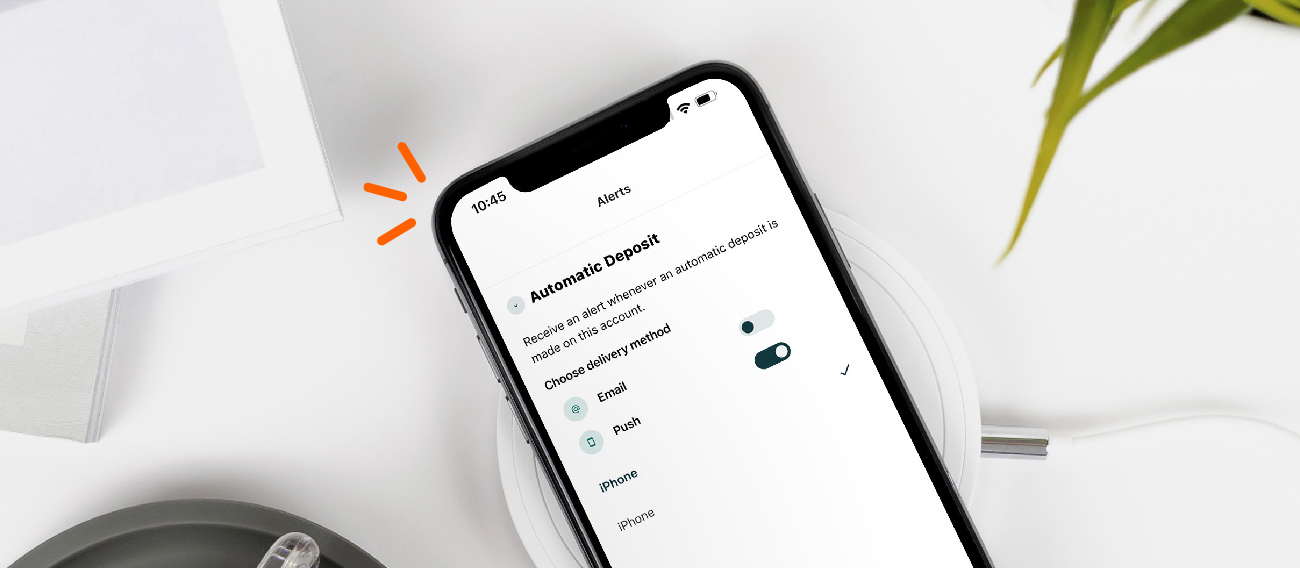
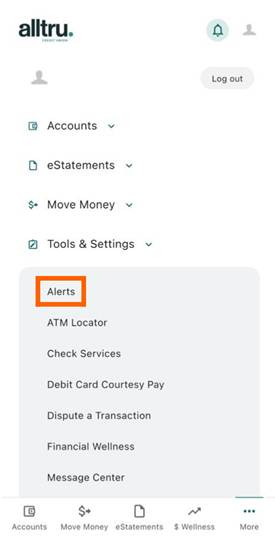
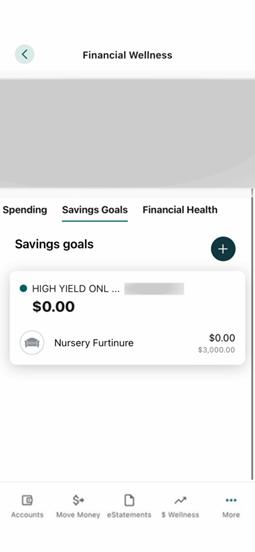
As an Alltru member, you can access our free digital banking tools to manage your finances. Our secure digital banking tools allow you to see transactions in real time. You can also set up savings goal trackers to help you stay on track for major expenses like a down payment, vacation, or education. To help you and your partner stay informed and transparent about your account activity, set up account alerts so you’re notified of transactions made in the account.
Monitoring Your Money Management
These tips and tools are only as helpful as you make them be. Shared passwords, budgets, and account tracking work best if you and your partner mutually agree to stay responsible for your spending. You’ll likely slip up a time or two. When you do, stay accountable for your actions and try again to regain trust and control of your finances. You may also need to adjust your budget for a few months until you two find a compromise that’s maintainable. By working together, you can watch your spending stay under control and your savings grow over time.
How to Change Your Name without Interrupting Your Financial Records
It’s not uncommon for one spouse to change their name after getting married. If you adopt this tradition, beware that you’ll have to change your name in the right order seemingly everywhere possible. Completing your name change in the right order is key for keeping your financial records accurate now and going forward. If you opt to change your name after getting married, here are the steps to follow.
Legally Changing Your Name
Before you do anything else, you have to legally change your name. This is done through Social Security. For a smooth experience, start the process with their online form. Then, you’ll need to bring an official copy of your marriage license and your current ID or driver’s license to your appointment at the Social Security office. At your appointment, they’ll process your name change and arrange for your new Social Security card to be mailed to your home.
After updating your name with Social Security, visit your local DMV to update your driver’s license. Bring your Social Security paperwork with you, and check your state’s Department of Revenue requirements ahead of time to make sure you have any additional documents you may need. After your visit, you’ll leave with a temporary driver’s license with your new name while you wait for your official card to arrive.
Updating Your Bank Account Information
Since money makes the world go around, updating your bank account information should be your next priority. When you visit the credit union, you’ll need to bring an official copy of your marriage license, your new driver’s license, and your new Social Security card. During this visit, you can also opt to add your new spouse to your accounts if you choose to do so. You can also get new instant debit cards with your new name.
Changing Your Housing Information
Since you have a new legal name, you need to update your information with your mortgage lender or landlord and ask what documents you need to provide to update your name in their records. They’ll likely want an official copy of your marriage license and new driver’s license. If you are a homeowner, you should also contact your county recorder and update your name in their records to avoid unnecessary strain during the next tax season.
Changing Your Car Loan and Title
Next, you should update your name on your car title and loan. Your lender will likely want an official copy of your marriage license and your new driver’s license. Next, visit the DMV again to change your name on your car title. Bring an official copy of your marriage license, your new driver’s license, and your car title with you. During the same visit, the DMV can update your name and address, if necessary, on your registration to ensure your personal property tax bill is sent with your new name to your current address.
Updating Your Insurance and Other Bills
At this point, your name is updated on all your major financial and property documents. Next, you need to update your new name with your insurance providers. This includes health, car, home or renter, life, and others. These companies will likely want the same documents to prove your name change. However, check individually to ensure a smooth process. Finally, update your name of any remaining bills like utilities and subscriptions. Most of these companies will have an online profile that you can easily update.
How to Manage Your Money as Newlyweds
While you and your spouse likely came into your relationship with differences, you can navigate them well with these tips. Whether you choose to fully combine your finances, keep them separate, or adopt a hybrid approach, there’s no one-size-fits-all solution. The key to money management for newlyweds is finding a system that promotes transparency, trust, and teamwork. Remember, we’re in your corner to help you navigate these changes and manage your money well.